Junior Thinker
Visual coding, robotics, electronics, sequencing and early problem solving.


Ages 5–18 can start at an age-appropriate level and build from visual coding and robotics into Python, AI, software development and advanced technology skills.
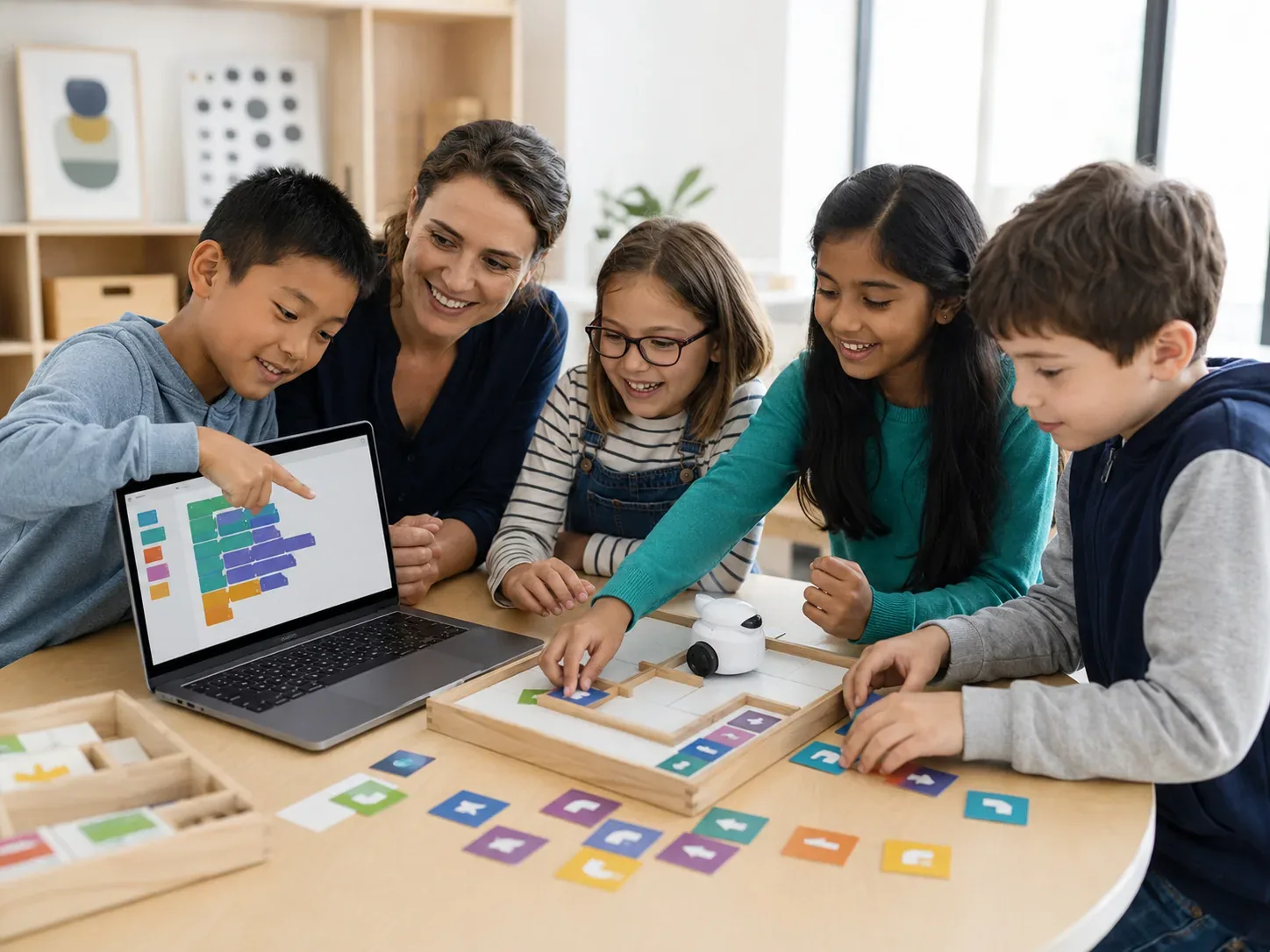
Coding Foundations follows the established Ultimate Coders Burlington pathway, with age and experience guiding the first placement.
Visual coding, robotics, electronics, sequencing and early problem solving.
Scratch, Python, robotics, web development, AI and creative projects.
Advanced languages, software development, data, AI and modern technologies.
Good beginner coding classes should keep students creating while steadily improving debugging, logic, independence and their ability to explain what the code is doing.
Build projects with a visible result so new concepts have a purpose.
Learn to read errors, test ideas and improve code instead of immediately asking for the answer.
Move into more demanding languages and projects when the student is ready—not simply because of age.
The best first tool depends on age, reading comfort, prior experience and what motivates the student. Our guide Scratch vs. Python vs. Roblox explains how we think about those starting points.
Students who already have strong programming fundamentals and enjoy algorithmic problems can also explore Competitive Coding.